

Transforming Building Energy Governance: Inclusive Support Accelerates Compliance Across Java and Yogyakarta
Yogyakarta, Mei 2026 — Behind the intensive operations of public services, hospitals, and universities, government facility managers are facing increasingly urgent strategic challenges. Energy consumption in the building sector continues to rise, positioning government buildings as a critical focal point in Indonesia’s efforts to reduce carbon emissions. At the same time, institutions are expected to align their operational governance with the latest regulatory framework, namely Government Regulation (PP) No. 33 of 2023 on Energy Conservation and Ministry of Energy and Mineral Resources Regulation (Permen ESDM) No. 3 of 2025. Without clear technical guidance, this policy transition can often become a complex administrative burden.
Untangling Operational Challenges on the Ground
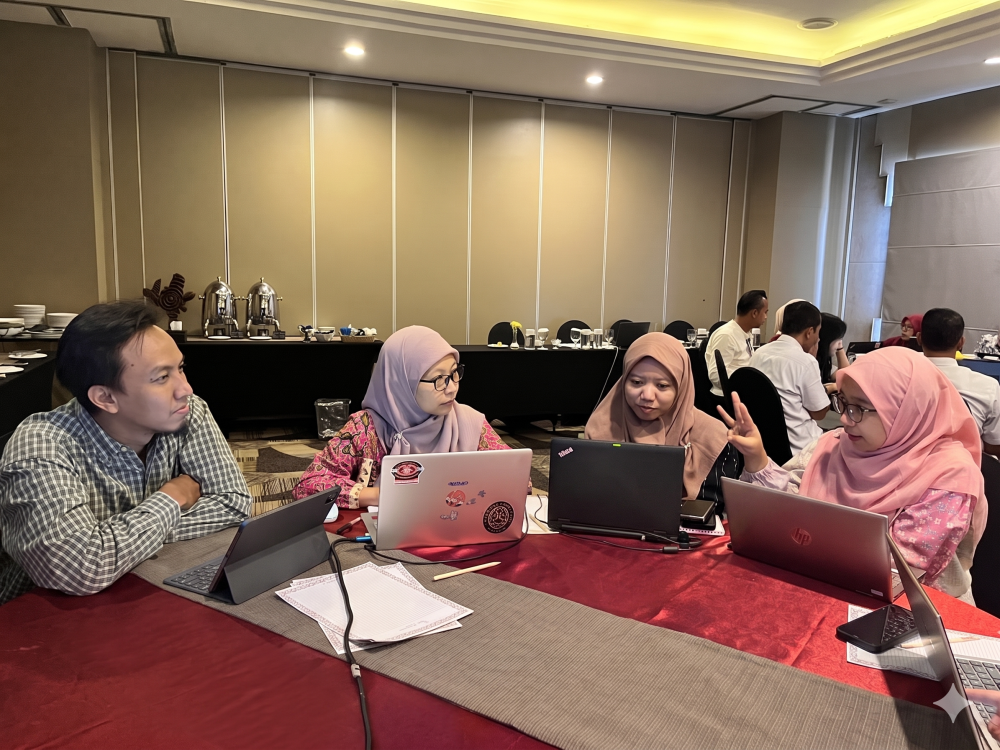
These operational realities became evident when participants from West Java, Central Java, and the Special Region of Yogyakarta representing local governments, technical agencies, hospitals, and universities gathered to evaluate the implementation of energy management practices within their facilities. The discussion highlighted that the primary challenge to energy efficiency is not a lack of commitment, but rather the need to strengthen fundamental aspects of technical governance. These include completing policy documentation, maintaining consistent energy consumption reporting, integrating the Online Energy Management Reporting System (POME), and accelerating the implementation of energy saving action plans.
From Administrative Compliance to Tactical Intervention
In response to these findings, IREEM, in collaboration with the Directorate of Energy Conservation of the Ministry of Energy and Mineral Resources (ESDM) and with support from the UK PACT SUSTAINED Programme, implemented a targeted intervention through the Group 3 Impact Assessment and Energy Management Implementation Mentoring programme. As a continuation of Phase 1, which focused on the training and certification of energy managers and energy auditors, this phase shifted its focus entirely toward operational mentoring and implementation support.
Building managers received direct assistance from technical experts to review the completeness of essential energy management documentation, ranging from the establishment of energy management teams and investment monitoring mechanisms to technical analyses of emissions reduction performance. A peer-learning session also provided participants with an opportunity to exchange best practices and examine the most practical energy-saving strategies implemented across their respective institutions.
Systemic Impact at the Portfolio Scale
This governance transformation, centred on continuous mentoring and capacity strengthening, has already generated measurable results. The second Impact Assessment revealed significant improvements in energy management governance maturity across participating institutions. The Regional Secretariat of Central Java Province, for example, increased its compliance score with Ministry of Energy and Mineral Resources Regulation (Permen ESDM) No. 3 of 2025 from 92 percent to full compliance at 100 percent. Similar progress was recorded by the West Java Energy and Mineral Resources Agency, which improved from 83 percent to 100 percent, and Institut Teknologi Bandung, which achieved a substantial increase from 64 percent to 87 percent.
These achievements reinforce a fundamental principle: robust energy data is not merely an administrative requirement, but an essential foundation for measuring energy savings, reducing carbon emissions, and identifying opportunities for efficiency investments. Supported by inclusive leadership and sustained mentoring, government buildings are increasingly positioning themselves at the forefront of effective, accountable, and environmentally responsible public facility operations.